Thursday, October 18, 2012

Colors, they are a changin' . . .


I have gotten a chance to spend some time down at the cabin the last two weekends.
And despite, or because of, the dry summer, the change is really beautiful.
I think it is a little early this year, but if cooler weather comes early, . . . well, I'm OK with that.

I love the sun coming through the trees, especially the orange leafs.

Above the little cabin.
Late afternoon sun.


While down there, I was able to make sure the stove was in working order.
And do some cleaning up.
Got the hiking sticks ready.
Worked on our collections of shells and rocks . . .
and other stuff.
First weekend we had time to do a let relaxing.


and jumping.


The second weekend I was alone, and I found the colors a little further along.
Got the porch ready for some serious sitting.


Heeding my own posting. . .
I took some time to relax and. . .

. . . enjoy another new beer.
As the label says; 'Wee Heavy' and it was.
A really strong malty Scotch Ale, almost thick in texture.. Nice color and clear and a good quality beer.
A little strong for my liking, and although a very good beer, I will not be looking for it again.


The drive home down back roads only made for an even better weekend.
Near sunset.

Monday, October 15, 2012

A first . . .

. . . for me.
Tried doing a sketch on my IPAD out at the cabin yesterday.

Here it is. . .
I will post some pictures from the day later.

Wednesday, October 10, 2012

A couple from this weekend. . .

We had another busy weekend. Even for a three day weekend we kept it pretty full.
We got in soccer, times with grandma's, hikes, a carnival and some log cabin hunting.

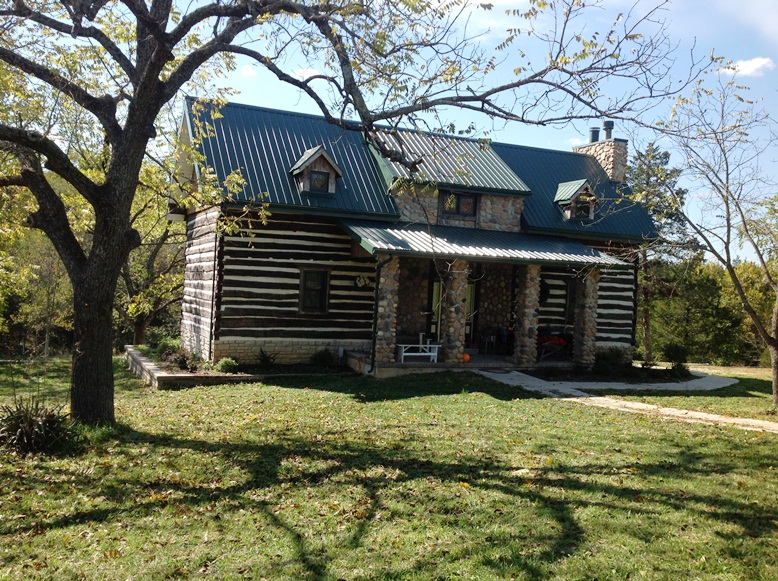
This first one is a very old cabin that has been lovingly restored and remodeled.
I first came across this one about six years ago when I was out on one of my expeditions before daughter came along.
I had stopped and asked the owner of the farm if I could go down and take some pictures of this old log home.
 I told him I had worked on a few and always loved finding ones I had not seen before.
He said sure, and if I had any ideas on how to go about fixing it up to let him know.
He was hoping I could do the work if I was interested.
I looked at the place, a very fine 125 plus year old cabin, that was probably the original farm house for the valley it was sitting in.
As with most cabins, all the logs were in pretty good shape except the ones near the bottom.
Usually these old homes were built on very little foundation with the expectation that they were, hopefully, going to be temporary till a better house could be afforded and built. This usually allowed for water and snow to rot out the bottom logs after many years. Even if they were put up on some rocks, with no foundation down to frost line, the rocks would eventually sink in the soil.
And this is what had happened to this one. The base logs were rotted away for the most part.
It was a fine old two-crib building with a dog-trot between the two cabins.
I told him I was sorry that I could not do the work and suggested that however he was going to restore it, one of the first things he needed to do was raise the whole building to get up off the ground and replace the bottom logs.
I will never know if he took my advice or whether the men who did the work came up with that on their own, but they definetly fixed the foundation.
And although my critical eye finds lots of things I don't like with this restoration, who ever did the work did an excellent job. And the faults I find are more in appearance than in workmanship.

 The view from the front, which is the first two pictures, is the most appealing. They have leveled up all the logs and placed them on a nice foundation, which now includes a basement.
If it is not located where the original foundation sat, it is real close.
The dog-trot has been elegantly closed in to make more living space between the two cabins and a nice front door has been added with a covered porch.
 Once you go around the back the cabin becomes very interesting.
At one time really cool, and at the same time a little overbearing for the sturcture.
An additional room has been added with either logs from another cabin or newer logs. And the logs, if they are new, have been well worked by someone who knew what they were doing.
You can tell by the difference in the thickness of the logs between the front two rooms and the addition that they are not of the same time period.
(Count how many logs make a wall.)
Although the three porches would make for great entertainment, I don't like the shape of the roof or the fact that, from the back, the addition overpowers the structure.
The only other complaint I have is that the stones used in the porches, pillars and entrance way do not match the foundation, nor are they of a type found in the area, nor put down like stone would have been on log home construction. They remind one more of something that would be done out west.
Over all I would give the restoration and remodeling a 98, for the only flaws are, to me historical and visual.
If it were given to me someday as a second home,. . . I would even bring it up.
I will make it a goal to find the pictures from a few years ago to do a before and after show.

Help Home Hunter showing the difference. between the foundation stone and pillar/fireplace stones.
 Showing off the front door.
 Love the door, mildly dislike the stone.


More to my liking.

 This fine restoration is now a museum in Marthasville Mo., very much a part of Daniel Boone's old stomping grounds.

This is more of a restoration than a remodeling.
Six over six windows have been included.
In the old days, glass was hard to form in big sheets, so smaller pains would be made and fitted into frames. Six over six was the most common.
 The Dog-trot has been very nicely framed and stoned to make more interior living space.
More many years, probably, the dog-trot would have been lift open to provide a shade area around the house to do household chores or to sit or sleep in the summer. And to give it it's name, it is where the family dog would hang out.


The logs have a wonderful brown color, like newly cut logs.
Logs in real time would only stay brown for a short time.
Sun light would eventually turn theme grey.
Note how the stone work is more typical of what would be found in Missouri.
The white squares in the logs above the windows would be where the upper story floor beams would be in the logs.
This would be called 'a story and a half dogtrot cabin'.
The stairs going up would be in the dog-trot section.

 Another cabin has been placed at one end.
Note how the mortar chinking is brown, where in the first cabin discussed on this page the mortar chinking is very white.
Although now made out of cement, chinking would originally be made out of mud, with straw or horse hair mixed in to provide a binding.
It would probably have been patch or redone several time till finally cement was used.
Many restorations will use colored cement now a days to replicate mud.

 Fine dove tail corners.


Help Home Hunter was napping when we went by this one.


The interior is set up with period pieces.

Tuesday, October 9, 2012

I had the pleasure. .

I had the pleasure of attending the gallery opening for works by Bryan Haynes, and I had a great time.

I arrived at the opening shortly after it started and stayed about an hour just enjoying the works.

Bryan's work in some ways can be compared to Thomas Hart Benton's in it's style, with very many unique touches definitely his own.
I found myself comparing many of the faces to works by J. C. Leyendecker.

If you have an artist you enjoy, you can get so much more out of their work if every once in a while you can get close to some of the paintings.

Bryan's work ranged from fairly small, maybe 9" X 18', to fairly large, like the one in this photo, 40" X 60".
What I enjoy most about his work is the fact that I am very familiar with many of the areas and subjects he paints about.
I didn't get to talk to Bryan as much as I would have liked to about a couple of his works. But that's OK, he was having a very busy evening.

Friday, October 5, 2012

One more from Michael. . .

 Here's a comp I just finished that will result in a 3' x 6' painting for a local client

Michael Haynes


Thursday, October 4, 2012

A couple of treats just in from out west. . .

Michael Haynes, see the link to his web site over in favorite local artist.

Clic on either to enlarge.


And enjoy.

Ft. Zumwalt reconstruction update.. . .


  I have not updated the reconstruction of the Old O'Fallon Mo Fort Zumwalt in a while.

This first photo is of the fort in the late 19th century and this is how it looked at it's most complete.
 This photo is from 1937 when the fort was being taken down after being mapped and researched.

The old stone fireplace was all they left and it stood for many years. But it finally came down also.
 Here is how it stands now, looking at the same side as the 1937 photo. That would be the east-south-east.
 A little closer.
 With the center and west sections being worked on.

 Rebuilt fireplace serving the center section and the west section.
 Floor joinery.
 A table lap joining the two sections.
It is really hard to join two cabins together that are not built at the same time, and this would not be a preferred method.
They are doing it this way to replicate the original.

There is probably a good reason the original builders built it like this.
One reason would be shortage of man power, so short logs were used to make it easier for just a couple people and a horse to do the work.
 North side of center and west section.
The walls are not as high on this side, so we can see the floor joins a little better.
 Same but longer view.
 Really nice ax work on the floors joining near the fireplace where a full log could not span the width  of the floor. They would probably use a dove-tail joint at the connections to keep the logs from pulling out.
 A closer look.

 Near the chimney the logs also could not run the complete span of the walls, so a tongue in groove join would have to do.

Once above the opening of the fireplace, logs could start spanning the room again.
Notice the shelf built into the fireplace to help support that first log.
You can also see the tongue running up to the first complete log. It would be notched into the bottom of that log.

South side wall.
 The groove on the south wall, up close.
Note the tongue on the first log.

 The pile is getting smaller.
From the east.

Monday, October 1, 2012

Steak and Ale Pie and my search for culinary Heaven. . .

Since our trip back to England in 2010, I have been searching for a perfect recipe for Steak and Ale pie.
If you know me, you know that if you put it in a pie crust or surround it in a good bread, I am probably going to love it. 'Meat and Potato Pie', my favorite. Think savory bread and a cup of tea, YUM!

So, when we were in England and we would visit a pub I would gauge the quality, in my mind, of the establishment by the quality of their Steak and Ale pie.
Hardly seems like the ideal way to gauge a pub. Where I could have been using pints or ambiance as the meter I chose Steak and Ale. (This is not to say that choosing the right beer or beers while making this survey was not important.)
And although I did not have Steak and Ale pie for every meal or in every pub, at least in the pub category, it came close.
What we found in the pubs we stopped in was that your pie was usually going to come with 'mushy peas' and chips. So the quality of these two sides added or detracted from any judgement.

To me, something like Steak and Ale pie is the ultimate comfort food and when I die I hope my heaven includes a good pub, with a nice corner table where I can sit and read while waiting for my loved ones (that's hoping my loved ones image of heaven includes me being in it) and on the menu will be Fish and Chips and Steak and Ale pie. (The search for the best Fish and Chips will have to wait for the next trip.)

So, once we got home my search began for the perfect, in my eyes, recipe.

And I think we came close this weekend.

Below is a picture from the blog where I got the recipe.

And I am thinking about sending  her a dozen roses every year for including this culinary delight on her blog.

The ingredients were perfect and the portions superb and I was very jealous of having to share with the guest we had over for the unveiling.
(My wife put me in line for that one.)

We served it with a nice ale, mushy peas and oven roasted potatoes, then settled down to enjoy it.
And, darn it, if I didn't make so much that I had to have it again the next day.

The trials I put myself through.

Here is a link to the blog. . .

Thursday, September 27, 2012

Chestnuts. . .

 I have always loved chestnuts.
Part of it is how good they taste, and, probably, an even bigger part of it is childhood memories.
Chestnuts, when I was a kid, were something of  a treat that we only did at Christmas time.
At about $900.00 a pound (OK, maybe only $9) you can see why mom and dad could only afford them once a year.
And boy did we look forward to them.
Mom usually boiled them, and we would open them and have them with just a little salt.
It didn't matter if you burned your fingers a little trying to get them open.
 When I started working in the produce department of a local grocery store I was able to be very selective in my pickings, being responsible, after all, for wrapping and weighing them.
 But they were still like $900.00 a pound (OK, maybe only $9).

So, what brings up these memories this time of year.
Well, my brother has a couple of real nice Chestnut trees in his back yard, and over the last few years he has been having very plentiful crops.
If you don't mind wearing gloves and heavy boots the effort of gathering them has big rewards.
We usually roll them over with our feet after they have fallen to break the outside spinney husk off. Then pull them out with our gloved hands and place them in a basket.
This year, the ones we can't eat right away, (because there are to many), are being boiled, peeled and placed in the freezer by mom so we can enjoy them all winter.

Each Christmas we can still enjoy them roasted during our holiday walks on our historical Main St. And as we listen to the carolers, it has become a tradition to buy a bag full (of about three) and enjoy them while we walk.
I want to thank other bloggers for these wonderful photos of Chestnuts, my camera is broken and I am relying on the kindness of others.

Also, if you want to read a really enjoyable book that centers around our lost American Chestnut trees (yes folks, most of the ones we enjoy are Chinese Chestnuts) and rural lands, I would highly recommend Prodigal Summer by Barbara Kingsolver. A great read, even if you don't like Chestnuts.


Wednesday, September 26, 2012

One of my favorites. . .

I fell in love with 'Jakes' work when I worked in Maine and read several books by Edmund Ware Smith that were illustrated by Mr. Day.
I had the chance to meet him in the late 70's, and became the proud owner of two of his works.

I was very happy today to find this site offering prints of his work, along with his biography.
Below the painting you will find a piece on Jake from Down East Magazine from 2009.
enjoy.

Site for Maurice Jake Day


The Mainer Who Found Bambi


DEE0912Day6.jpg

Outdoors artist Jake Day left a whimsical legacy you can still see today — on-screen or on the snowy streets of Damariscotta.

  • BY: ANDREW VIETZE
  • PHOTOGRAPHY BY: TODD CAVERLY
Peering through the windows of 20 Bristol Road in Damariscotta on a cold December day is almost like looking into another time. Between the shutters and behind the glass of the white-clapboard home are three-dimensional dioramas, each meticulously crafted, showing holiday-themed scenes. In one an elf plays a horn for an audience of squirrels and chipmunks. In another the animals of a manger stare toward the barn door expectantly. The turreted castle of a fantasy story occupies one, and in yet another a little cabin sits beneath a tall mountain that could only be Katahdin.
Each one of the nostalgic displays has the fine detail of an artist’s dollhouse or expensive ship model, and they all have a certain magic to them, an almost fairy tale-like quality. Unlike so many hokey decorations featuring elves and woodland animals, the dioramas are artistic in their composition, worthy in fact of being displayed in the Farnsworth Art Museum (which they were).

They’re certainly unexpected in the windows of a satellite office of Brunswick’s Mid Coast Hospital. If you didn’t know to look for them three doors down from the Baptist church, you might stroll right by. But their presence here makes perfect sense when you learn who once called this four-square Federal home. Peek into these windows and you peer back through the past into the wonderful world of Jake Day.
When does the story of an artist really begin — with his birth or with the creation of his masterwork? With Jake Day, it’s best to start in 1930s Hollywood. Walt Disney had just purchased the rights to an Austrian children’s book with hopes of making it into a feature film.Bambi: A Life in the Woods tells the coming-of-age story of a young fawn who has to deal with all the hazards of the world after his mother is killed by a hunter.
Already world-renowned thanks to his short films about a mouse named Mickey, and his first movie, Snow White and the Seven Dwarfs, Disney intended to use a California mule deer to represent Bambi. This notion rankled one of his artists, a painter from the tiny town of Damariscotta. Maurice “Jake” Day knew the woods, and he didn’t think it right to portray an Austrian fawn with a big-eared mule deer.
“Jake said, ‘You need a New England white-tail deer,’ ” explains his son, Dick Day, who lives in Newcastle. “And Disney said, ‘Okay, go and get me one.’ ”
And so Day did. He went home on an all-expenses-paid trip to locate a little whitetail. Through connections, the artist contacted Penobscot County Fish and Game wardens and arranged to have two orphaned fawns — Bambi and Faline, as they were later named — shipped to Hollywood, along with a happy menagerie of skunks, rabbits, owls, and ducks. The animals were penned on the studio’s set and Disney’s animators spent days watching them move, sketching and painting.
Once the animals were secure, Day was dispatched to the Maine woods to make photographs and sketches of a forest that would be home to such creatures. These images would serve as the backdrop of the film. Day knew just where to look. Along with his good friend, a Nobleboro logger named Lester “Sawdust” Hall, he went north to Baxter State Park, which had been a park for less than a decade.
On Disney’s dime, Day and Hall set up at the park for six weeks, based out of the old Hersey Dam site on Sandy Stream on the east side of Katahdin. Jake’s two sons, Dick and Mac, came along to help transport gear, and Penobscot County warden Caleb Scribner would help guide and locate animals. Journeying through the woods, Day sketched, painted, and photographed possible settings for the movie while his companions went fishing. At night they sat around the fire reading the Bambi screenplay.
In the script there is a woodland glen where many of the major events of the film play out, and the group spent days searching for just the spot. One day, on the way back to camp after a long backpack up to Chimney Pond and down into the Northwest Basin, they found it.
Lester Hall was in awe. He kept a journal on the trip and wrote: “As we came out into the New City Clearing and paused to look out over the meadow toward the wooded slopes of Russell Pond, the thought came to us at once — ‘This is Bambi’s birthplace. Here is the clearing where the forest creatures came for food and play. Here is the edge of the forest where they disappeared when danger threatened. And here is the little knoll from which the elder deer could keep an eye on their offspring.’ It was perfect.”
The pair stayed in the glen for days, making thousands of images and taking in every detail. As Hall writes later, “This valley was at one time the home of some of the largest pines that ever grew in Maine.” He marveled at a stump “actually large enough in diameter to turn a yoke of oxen on.” The drawings, paintings, and photographs Day created at the clearing and across the park made it back to Disney and were used by the animators to create the world of Bambi.
“When you watch the movie Bambi,” Dick Day notes, “you are looking into the Maine Woods.”
For a Maine kid who loved the outdoors and art, it was the moment of a lifetime. Born in Damariscotta in 1892, Jake Day attended high school at Lincoln Academy, where he did his first serious painting of a local church. From there he moved on to the Massachusetts Normal School, studying for a year before transferring to the School of the Museum of Fine Arts, Boston. Upon graduation he found the world embroiled in a war and enlisted in the Naval Camouflage Department of the Emergency Fleet Corps in New Orleans.
After the war, Day began work as a commercial illustrator, doing children’s books with well-known friends of his. “Jake was very close to Henry Beston and Elizabeth Coatsworth,” Dick Day says. At the time, Beston was best known for his children’s books, but he’d go on to writeNorthern Farm, his famous memoir about living a life in harmony with nature. “It was from my folks that they learned about Chimney Farm.” Jake’s illustrations also appeared in a range of magazines, including House BeautifulHome and GardenAtlantic Monthly and Vanity Fair.
Day was making a name for himself in Maine, but he was intrigued by the West Coast. “He read with interest what was going on in Hollywood,” says Dick Day. “It was the Depression, and he was searching for [something] better than trying to eke out a life here doing landscape paintings that nobody could afford to buy.”
In 1935, Day uprooted the family and moved to Laguna Beach, California, where he continued to draw and paint. An exhibition of his “imaginatives” — paintings of playful animals — in a local gallery caught the eye of two up-and-coming animators. Hugh Harman and Rudy Ising did contract work for several Hollywood studios including MGM and Disney, and they offered the young Mainer a job. Harman-Ising Productions had produced Looney Tunes, Merrie Melodies, and Silly Symphonies cartoons, and Jake went to work on their production Merbabes, an undersea adventure, and several episodes of the studio’s Two Little Pups and Little Buck Cheeser cartoons, the latter of which features a mouse that would inspire Jerry of Tom and Jerry fame.
Thanks to his work on these shows, Day was eventually hired as an artist with the Walt Disney Company in the mid-thirties — at the very time the studio was beginning to work on a certain film about a certain fawn, hoping that this feature, planned as the studio’s second full-length, would break new ground.
“Disney didn’t intend this to be a kids’ movie,” says John Fawcett, owner of Fawcett’s Toy Museum in Waldoboro and an artist whose own work was included in the book The Art of Mickey Mouse. “He was inventing a new art form, an animated nature film.” And he wanted a realism the likes of which hadn’t been seen in cartoons before, prompting years of painstaking research.
When the movie was finally done, Walt Disney thought it proper to thank the people of Maine for their help. “When it came time to premiere the movie, Disney wanted to have it shown in Augusta, because so many Maine animals and scenes were used in the film,” remembers Dick Day. “And the Maine Department of Fish and Game said, ‘No way. That movie will hurt the sale of hunting licenses.’ ”
However hunting sales fared, Disney’s gamble — an animated picture about a deer whose mother is shot — paid off. Bambi would become one of the most beloved movies of all time and, some say, Disney’s masterwork. As instrumental as Jake Day was in the project, though, his name never even made it into the credits because all his work was as a researcher for the credited animators. By then, Day wanted out of Hollywood anyway.
“My mother called it ‘too artificial,’ ” remembers Dick Day. The time he’d spent in Maine doing the research for Bambi had made Jake homesick, and he was tired of working for someone else. “I never worked on a schedule except in the movie business when I worked sixty hours a week,” Day told a Lincoln County Weekly reporter in 1977. “That was one reason I left to come back to Maine. I like to be able to take a walk in the woods whenever I want.”
So he moved the family back to the home his great grandfather built in 1798, and started looking at ways to make a living. At the time, the automobile-based tourism industry was still in its infancy, but Day recognized the economic possibilities of catering to those motorized visitors. “He knew the money was on the coast,” says John Neff, who wrote about Day in his book, Katahdin: An Historic Journey. “And he began to be a coastal landscape painter. That was what really put the food on the table.”
Day made an arrangement with his old friend Lester Hall. The lumberman had been building little log cabins, and he gave one to Day for free to use as a store in exchange for Day’s promotion of the building. The Days ran the Whittle Shop on Route 1 for several years, selling paintings of pine and surf and driftwood scenes. Jake’s wife, Beatrice, did much of the selling while her husband crafted the wares. Occasionally, for his own entertainment, Jake ran off with his buddies to the woods.
Jake Day first visited Baxter State Park in 1933, just a couple of years after Percival Baxter had given the people of Maine its tallest peak and two years before Day moved to California. Previously, Day and his family had been avid White Mountain campers. On one trip in 1932 they invited Hall along with them. The Nobleboro logger wasn’t  impressed. He found the Whites “too civilized,” as he wrote in his journal. He told Jake, “If he would make a trip up into the Katahdin region with me next year, I could show him things that would make him realize how much our Maine mountains have to offer an artist.”
Jake went with him and was smitten. “From that time on, he made all of his journeys to Baxter,” says Dick Day. The painter traveled north several times with Lester Hall, spending weeks there each summer. As Baxter State Park ranger Ed Werler recounts in his book The Call of Katahdin, “Together, Jake and Lester had explored and knew more of the park than anyone I had met.” Stationed at Roaring Brook Campground, Werler had a packing business and would help campers tote their gear into the backcountry with his donkey. He and Day became fast friends and would see each other outside the park during the long winters.
“He was an exceptional person,” Werler says today. “He had a great sense of humor. Awful good company.” The admiration was mutual — Day gifted Werler with a beautiful oil of Russell Pond, a generosity that he extended to several rangers.
After Lester Hall died in the 1950s, Jake often brought other friends with him into the woods of Baxter, including Damariscotta’s grocer, insurance man, doctor, postman, a mayor, and a veterinarian. Their exploits became famous nationwide. Outdoor writer Edmund Ware Smith did a series of pieces for Field & Stream about Day and his team of woodsmen. They called themselves “Jake’s Rangers” and made arm patches for their unit. Day was their “Colonel,” and their adventures in Baxter Park, on Matagamon Lake, and Down East in Cherryfield, as retold and exaggerated by Smith in several books, helped define the Maine tall tale.
Jake’s Rangers were so well-known that U.S. Supreme Court Justice William O. Douglas, who liked to fish in Baxter’s Kidney Pond, lobbied to join. “He wanted Jake’s Rangers to be his guides and helpers,” recalls Dick Day. “I think he thought they could take him to new places.” At the very least, they could show him a good time.
There was a certain irony to these trips. “I don’t think Jake even hunted and fished,” says Dick. “He just camped with them and visited with them.” Ranger Ed Werler noticed the same thing. While his companions fished, Jake hiked and looked for spectacular vistas for his work. “He didn’t do any serious painting up there that I remember,” says Werler. “He’d be taking pictures — he took thousands of slides — so he’d have subjects to paint later.”
Jake Day’s love of Baxter State Park continued until his death in 1983. He visited the area into his eighties and even climbed Katahdin with Governor Ken Curtis in 1968 at the spry age of seventy-five. He intended to summit again on his eightieth birthday but told a reporter “the blackflies were too bad.”
Day’s devotion to the mountain was recognized by the man who gave this huge fastness to the state, Governor Percival Baxter. “Percy was very fond of Jake,” says Dick Day. “He personally named him Artist-in-Residence of Baxter Park.” To this day the park displays many Jake Day works in its Millinocket headquarters, and his painting of a moose and a mountain is the logo you see on the side of park trucks.
It wasn’t long after returning from California that Jake Day’s two boys shipped off to fight in World War II. The artist worried about them constantly and came up with a diversion that would spread happiness through the community — he’d create Christmas dioramas and put them in the windows of his house to bring a little lightness to the holiday season. He’d just become a grandfather as well, and thought that these displays would make his grandchildren smile.
For decades Jake Day’s “Christmas Windows” were a holiday tradition in Damariscotta. Locals flocked to see them and kids would stand up on little stools to peer inside. In 1970, the dioramas were sent to the Farnsworth Art Museum, where they were displayed until 1999, becoming a Rockland-area tradition, as well. But the moving and storage of the units took a toll. Finally, a Jake Day Diorama Preservation Society formed in Damariscotta to return the artful creations not only to their original state but also to their original home on Bristol Road. That’s where you’ll find them today.
And if you look closely in one window, you might even see a fawn that looks very much like Bambi.
Visit the Jake Day dioramas at 20 Bristol Rd. in Damariscotta. Hours are 4 to 9:30 p.m. 207-563-5515.
  • BY: ANDREW VIETZE
  • PHOTOGRAPHY BY: TODD CAVERLY

This just in from Joy.

INTO THE ARCTIC. . .
What a quest!